EVERIAL Canada helps you organize the management of your documents and information. Our experts analyze your processes, tools, and practices. They work with you to define a tailored governance framework and support its implementation.
You’ll streamline your processes, improve compliance, and ensure the long-term sustainability of your document management practices.
More than 35 years of experience
Expertise gained in information management and the optimization of document-related processes.
EVERIAL Canada conducts an assessment of your records management practices. Our experts analyze your records, data, processes, tools, and associated responsibilities. They also examine volumes, usage patterns, technical constraints, and key risks.
This assessment helps measure your level of maturity and identify priority actions.
Based on the assessment, we work with you to define a governance framework aligned with your objectives. It harmonizes your document management policies with your processes and your digital environment.
Depending on your needs, this framework may include a records management policy, a filing plan, a retention schedule, and access rules. It also specifies responsibilities, retention periods, and the disposition of records.
We support you in reengineering your processes, selecting the right tools, and integrating them with your business applications or mission-critical systems.
Our experts can work with your teams to explain decisions, train users, and facilitate the adoption of new practices. This support promotes gradual change and a lasting transfer of skills.
Your documents are shared among multiple teams, tools, and storage locations. Without common document management policies, searches become more complicated, practices vary, and compliance becomes harder to demonstrate.
Responsibilities related to the creation, approval, retention, and destruction of documents are not clearly assigned.
Classification rules, metadata, and version management vary by service.
You have few reliable metrics on volumes, usage, and bottlenecks.
Policies, procedures, and retention rules are incomplete, scattered, or rarely enforced.
An EDM system or a new tool is deployed without a governance framework or change management support.
An assessment allows you to evaluate your level of maturity, identify priorities, and develop a roadmap tailored to your operational constraints.
Whether you want to implement an EDM system, modernize your tools, or automate a process, our support helps clarify your needs, responsibilities, and the target workflow before the solution is deployed.
Your documents are spread across multiple systems, shared spaces, and storage locations. An assessment helps identify duplicates, classification discrepancies, and practices that need to be standardized as a priority.


Your organization needs to better manage access to, retention of, and sharing of its information. We help you establish consistent rules based on usage patterns, sensitivity levels, and the requirements that apply to your business.
Validations, searches, and transfers take up too much time. Our experts map out the current workflow, identify unnecessary steps, and define a simpler, more streamlined process.
Organizations that manage large volumes of documents or sensitive information must meet several requirements. They must make information accessible, protect data, comply with their obligations, and ensure business continuity.
Our support takes into account the processes, constraints, and level of criticality specific to each sector.
Financial
Insurance
Medical
Municipal
Government
01
We gather information about your needs and analyze your reference documents, processes, tools, and available metrics. This step helps us understand your organization, your constraints, and your level of maturity.
02
Our experts map out information flows, tools, roles, and control points. They identify risks, redundancies, gaps in processes, and critical information.
03
We work with you to define a target framework, an action plan, and monitoring metrics. Our priorities take into account your business objectives, your resources, and the requirements applicable to your organization.
04
We support your teams as they adapt their practices. Policies, procedures, tools, and integrations are implemented gradually, depending on the scope of the engagement. Training, communication, and skills transfer facilitate the adoption of new ways of working.
05
Metrics are used to track the adoption of practices, the effectiveness of processes, and compliance with established rules. The results observed and user feedback guide any necessary adjustments.
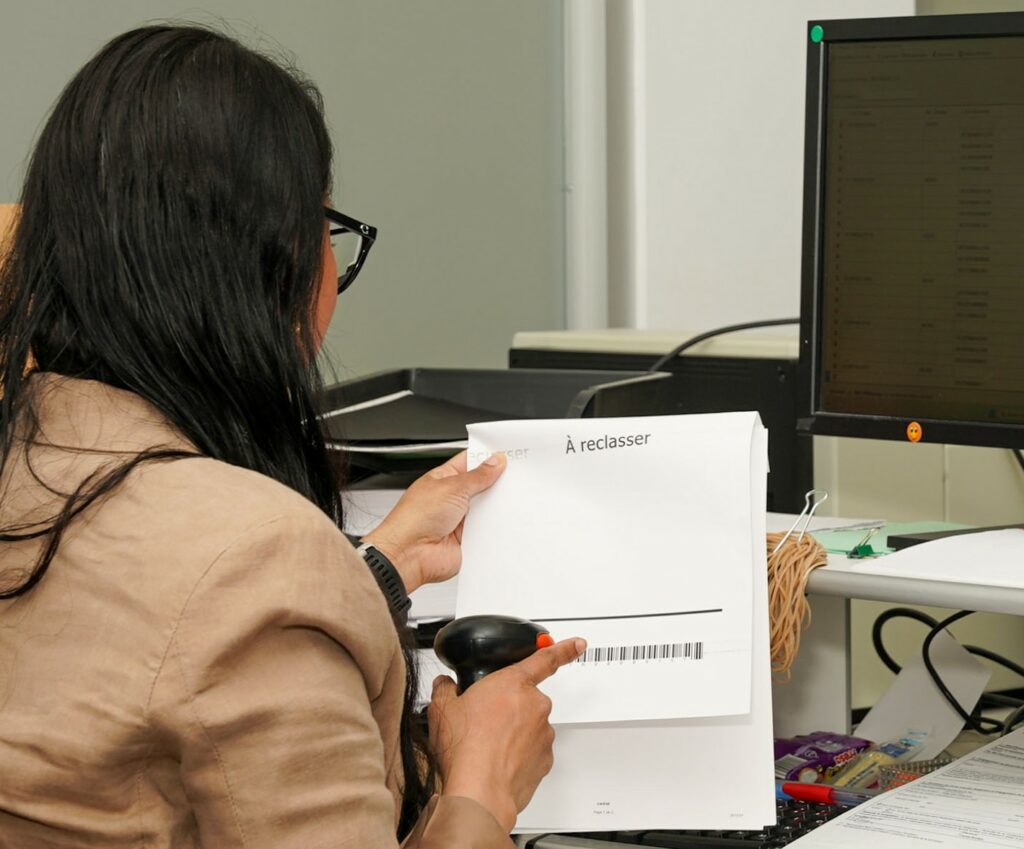


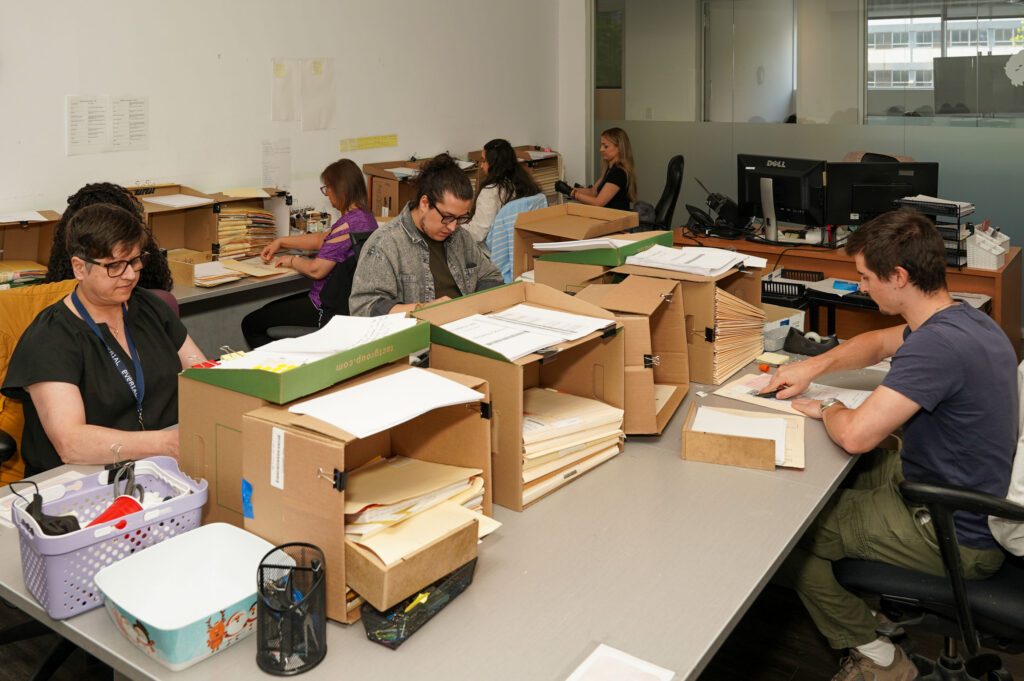
EVERIAL Canada tailors its support to your goals, the maturity of your practices, and the resources available.
Our experts work with your teams to analyze the current situation, explain our recommendations, and prepare for their implementation. Depending on the scope of the project, they may facilitate workshops, support internal communication, and train users.
The transfer of skills and follow-up support the gradual adoption of new practices.
Well-defined document governance makes it easier to apply rules on a day-to-day basis. It helps your teams find, use, share, and protect information in a consistent manner.
Standardized classification and search methods make it easier for authorized individuals to access documents.
The rules governing access, security, retention, and confidentiality are more clearly defined and enforced.
Each team understands its role in the creation, approval, retention, and destruction of documents.
Training, change management, and skills transfer empower your teams.
The approach takes into account the tools and systems already in use by your organization. Our experts work with your teams to define the rules for management, access, retention, transfer, and traceability to be applied in each environment.
They also identify the adjustments needed to standardize practices and facilitate data exchange between your systems, without requiring their replacement when it is not warranted.

These highlights demonstrate EVERIAL Canada’s ability to combine consulting, process expertise, and knowledge of document management technologies.
Effective document governance begins with a thorough understanding of the organization's practices, constraints, and objectives.
It is this analysis that makes it possible to build a sustainable and truly tailored framework.

Dina BABOUDER
Information Management Consultant – EVERIAL CANADA
Privacy Officer
Security depends as much on governance rules as it does on the tools used. Our support helps your organization integrate protection, traceability, and compliance into its daily practices.

Information governance encompasses the rules, responsibilities, procedures, and tools put in place to manage an organization’s documents and data. It governs their creation, access, use, retention, and final disposition, whether they are in paper or electronic form. In practical terms, it helps companies secure their information, comply with applicable legal requirements, and make their document management practices more efficient.
Information governance covers all of an organization’s information, whether it is contained in documents, databases, business applications, or collaboration tools. It defines responsibilities, access rules, usage policies, security, and retention policies.
Document governance focuses more on managing documents throughout their lifecycle: creation, filing, access, retention, archiving, and final disposition. It is therefore a component of information governance.
A records audit analyzes how an organization creates, files, uses, shares, retains, and disposes of its records. Depending on its scope, it examines files, procedures, management tools, responsibilities, access rules, and archiving policies.
It helps identify risks, gaps, and best practices, and then set concrete priorities to secure information, save time, and improve document efficiency.
No. Document governance can be established before, during, or after the implementation of an EDM system. Its primary purpose is to clarify responsibilities, procedures, filing systems, access rights, and document retention.
When a company is considering implementing an EDM system, this framework helps clarify its functional requirements and select a suitable solution. If a system is already in use, this guidance helps review its management rules and usage practices to improve its efficiency.
Depending on the scope of the engagement, deliverables may include a maturity assessment, process mapping, a target governance model, and an action plan. They may also include a records management policy, procedures, a filing plan, a retention schedule, or access guidelines.
Monitoring indicators, a practical guide, and training materials can be included in the service to facilitate the implementation of the recommendations and measure their effectiveness.
The duration depends on the scope, the number of processes being analyzed, the systems involved, and the organization’s maturity. A targeted assessment can be completed in a few weeks. Defining a governance model and implementing procedures can take several months.
The project can also be rolled out gradually, starting with the most critical issues. This approach makes it possible to achieve concrete results and save time without having to wait until the entire project is complete.
Adoption is based on simple rules, clear responsibilities, and procedures tailored to the realities of the workplace. Teams must understand the purpose of the changes, their role, and the expected benefits.
Training, internal communication, and user engagement facilitate implementation. Monitoring metrics and regular feedback then make it possible to measure the effectiveness of these practices and adjust them gradually.
EVERIAL Canada supports you at every stage of your document management processes, from document receipt and processing to management, automation, and archiving. Discover the services and solutions that can complement your project.
We handle your document management processes, from scanning to archiving.
Software solutions designed to capture, manage, and automate your document workflows.
This initial contact is non-binding. A specialist will assess your needs before making any recommendations.