EVERIAL Canada manages your paper and electronic documents throughout their entire lifecycle. The service covers their receipt, filing, storage, retrieval, and—when their retention period expires—their secure and authorized destruction.
More than 35 years of experience in records management
Expertise developed to support sensitive and demanding projects in Quebec.
EVERIAL Canada handles the receipt and storage of your paper documents in a secure environment. Boxes and files are labeled and organized according to the guidelines established with your organization.
This organizational structure makes it easier to track the records, allow authorized individuals to access them, and retrieve them when you need them.
Documents that are already in digital form or have been digitized can be organized, indexed, and associated with metadata that is useful for managing them.
They can then be integrated into your document management system, depending on your technical environment. This structure makes it easier to search for documents, track operations, and manage access rights.
Archiving is not limited to storing documents. It also involves tracking retention periods, managing requests for access, returning records, and disposing of archives at the end of their useful life.
Retention periods are applied in accordance with the retention schedule approved by your organization. At the end of these periods, documents may be retained for a longer period, returned, or securely destroyed, subject to authorization.
Documents pile up quickly within an organization. A single document collection may contain files subject to different retention periods. When archiving is poorly structured, it unnecessarily consumes time, space, and resources. Risks also increase when storage conditions and access are not adequately regulated.
Boxes and paper files take up space that could be used for your activities.
An inconsistent filing system slows down searches, verifications, and the processing of internal requests.
Each category of documents may be subject to specific rules and deadlines.
Your documents may be at risk of theft, loss, damage, or unauthorized access.
Without an established procedure, it becomes difficult to know which documents were destroyed, on what date, and following what authorization.
A well-designed archiving policy allows you to regain control without adding to your teams’ workload.
Your facilities contain a large number of boxes or documents. EVERIAL Canada organizes their sorting, identification, and transfer to a secure facility. Using a third-party archiving service also helps organize a scattered collection.
Some documents must be retained for a long time while remaining accessible. Archiving organizes requests for access, the release of files, and their return to storage.


For example, your contracts, invoices, or other business documents can be integrated into an EDM system. Indexing and metadata make it possible to quickly retrieve strategic information.
Your company must decide what to do with documents that have reached the end of their retention period. EVERIAL Canada carries out the authorized destruction process. A certificate of destruction can then be provided to document the process.
Financial institutions, insurance companies, medical facilities, municipalities, and government agencies manage documents that are subject to specific requirements regarding retention, access, and confidentiality. The archiving service is tailored to the nature of the records, the volume of documents, and the specific uses and constraints of each sector.
Financial
Insurance
Medical
Municipal
Government
Archiving involves five main steps, from the receipt of documents to the decision made at the end of their retention period.
01
Physical or electronic documents are handled according to a protocol established with your organization. The documents received may include archive boxes, paper documents, PDF files, or other formats specified as part of the project.
02
The teams verify the nature and organization of the documents. They then apply the sorting, filing, and identification rules agreed upon with your organization.
03
Documents are linked to metadata that is useful for managing them. They are then transferred to the physical or electronic preservation environment designated for the project.
04
Authorized users may request a document or a report. Each transaction can be recorded in a log to ensure traceability.
05
Retention periods are tracked throughout the entire lifecycle of the documents. Upon expiration, their retention may be extended, or the documents may be returned or securely destroyed, in accordance with the applicable authorizations.
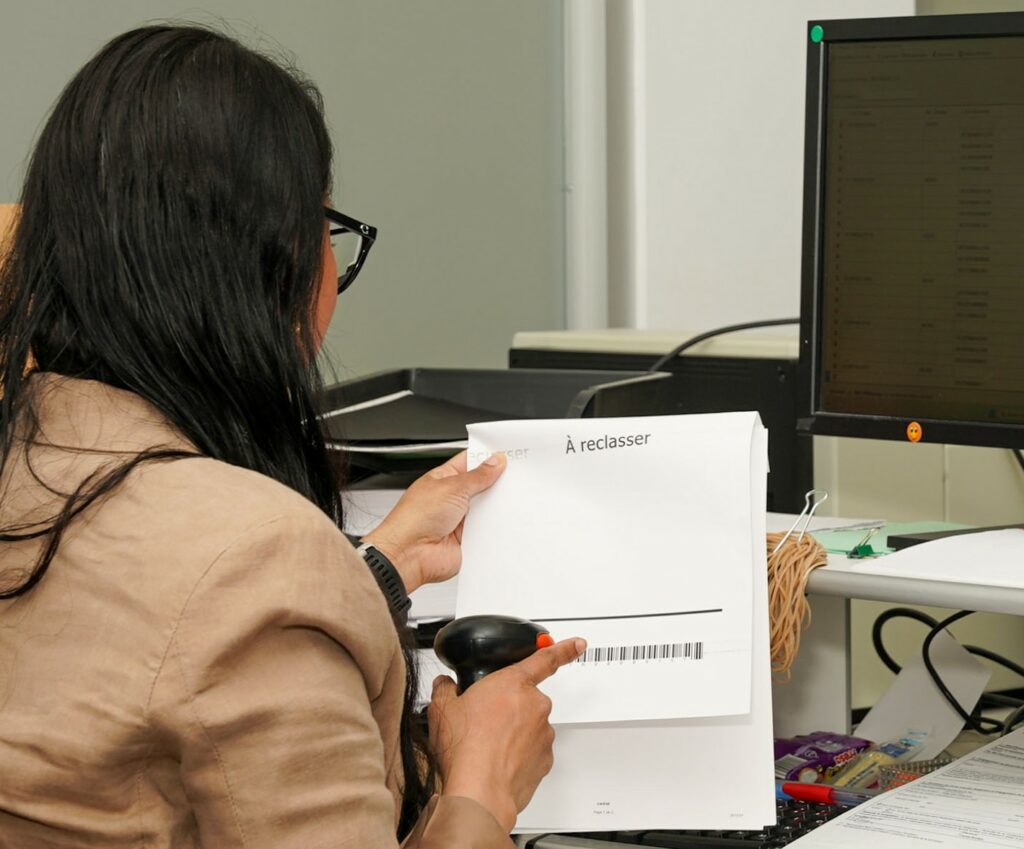


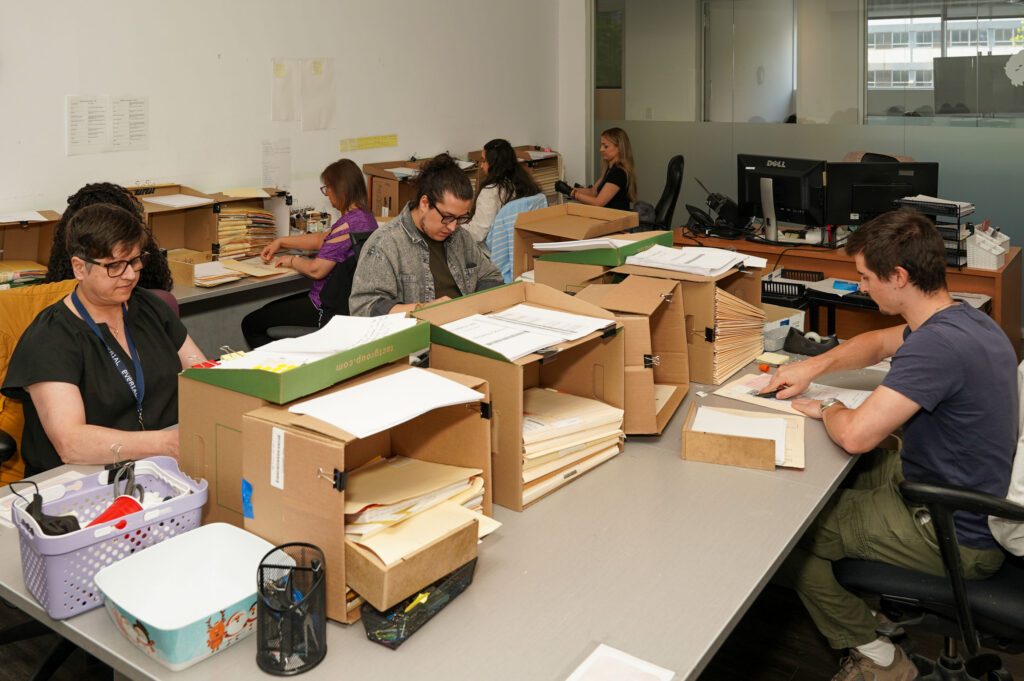
EVERIAL Canada begins by analyzing your document collections, their volume, and how they are used. Our teams also take into account the applicable requirements, preservation conditions, and access needs of your organization.
They then define the classification rules, metadata, responsibilities, and procedures to be followed. Setting up the service may include transferring the archives, configuring workflows, and training authorized users.
Finally, regular monitoring allows you to adjust procedures, service levels, and retention schedules as your needs change.
Centralized records management makes it easier to access documents and reduces the manual work involved in tracking them. It also provides better oversight of retention periods, access to records, and the disposal of files.
Move your paper records out of your workspaces while keeping track of the exact location of each box and each file.
Indexing and metadata simplify searches, lookups, and verifications performed by your teams.
A clearly defined schedule helps your organization retain each document for the specified period and manage its disposal when the retention period ends.
Centralize storage, access requests, returns, and disposal through a service tailored to your volume.
The archiving service is tailored to the tools and processes already in use at your organization. For physical records, document references, indexes, and movements can be tracked within the designated environment. For electronic documents, the files and their metadata can be transferred to your document management system.
The integration process depends on your architecture, the features available in your software, and the desired level of automation. As a general rule, no software changes are required. Formats, data exchanges, and management rules are validated before going live.

These figures demonstrate the experience and resources available to support large-scale documentary projects, particularly in the area of archiving.
Every archiving project begins with a thorough understanding of your documents and how your teams use them.
We then establish a clear system with simple rules for storing, locating, and making them available at the right time.

Valentin BRIELLE
Sales Manager – EVERIAL Canada
Security is a key consideration at every stage of records management, from receipt and transfer to access, return, or destruction. The measures implemented are determined based on the sensitivity of the documents, your organization’s requirements, and the scope of the project.
They help ensure the confidentiality, integrity, availability, and traceability of information, while facilitating controls and audits.

Document archiving involves organizing and retaining all documents produced or received by a company for as long as necessary. It enables the retrieval of information, protects its content, and ensures compliance with legal obligations until the document reaches its final disposition: long-term retention, return, or authorized destruction.
Records management, or business document management, provides a structured and traceable framework for this lifecycle.
Physical archiving, or paper archiving, involves storing original documents in a secure room or facility. It governs their filing, protection, access, and retrieval.
Electronic archiving involves digital files. These files are stored in software or a system designed to manage access, traceability, and the backup of documents.
A company can combine both forms of archiving depending on the nature, intended use, and evidentiary value of each document.
Archiving may involve commercial contracts, invoices, payroll records, accounting and tax documents, as well as administrative or medical records.
Historical collections, public archives, and documents of cultural heritage value may also be accepted. The type of archiving and the preservation conditions are determined based on the nature, purpose, and evidential value of each document.
The retention period depends on the type of document, the industry, and the applicable law. For example, contracts, payroll records, and tax documents may be subject to different retention periods.
The company defines and approves its retention schedule, with the assistance of a legal or professional expert when necessary. EVERIAL Canada then applies the rules provided as part of the archiving service.
An authorized person submits a request in accordance with the procedure established by the organization. Depending on the format of the document, it may be accessed digitally, scanned upon request, or temporarily retrieved if it is a paper record.
Each consultation or checkout can be recorded in a log to ensure traceability and secure access to the archives.
No. Going paperless does not automatically mean that all paper documents can be destroyed. Certain originals must be retained due to legal requirements, their nature, or the level of evidence required.
Before destroying any documents, the organization must verify that the digital copy is accurate and has sufficient evidentiary value. The decision therefore depends on the type of document, the retention policies, and the applicable requirements.
Destruction takes place only after approval by the organization and in accordance with the rules set forth in the records management plan. The procedure specifies the documents involved, the date, the method of destruction, and the person who authorized it.
Each transaction can be recorded in a register and accompanied by an official document, such as a slip or a certificate of destruction, to ensure the traceability of the process.
Outsourcing becomes a viable option when records take up too much space, require a significant amount of time to manage, or become difficult to locate and track. It can also address needs related to security, traceability, or compliance, as well as help improve the management of retention periods.
EVERIAL Canada analyzes volumes, usage patterns, constraints, and costs to design a service tailored to the organization’s needs.
EVERIAL Canada supports you at every stage of your document management processes, from document receipt and processing to management, automation, and archiving. Discover the services and solutions that can complement your archiving or document destruction project.
We handle your document management processes, from scanning to archiving.
Software solutions designed to capture, manage, and automate your document workflows.
This initial contact is non-binding. A specialist will review your documents and assess your needs before making any recommendations.